
Studio Help Blogs
Big Show Shot Bags & Marker Bags for Theatre | STM

Nov
In a theatres, shot bags provide ballast where the equipment or scenic design calls for it. Marker bags provide movable references for rehearsal blocking and scenic placement. Selecting them well means considering the floor, the movement of the show and the crew who will reset everything between scenes.
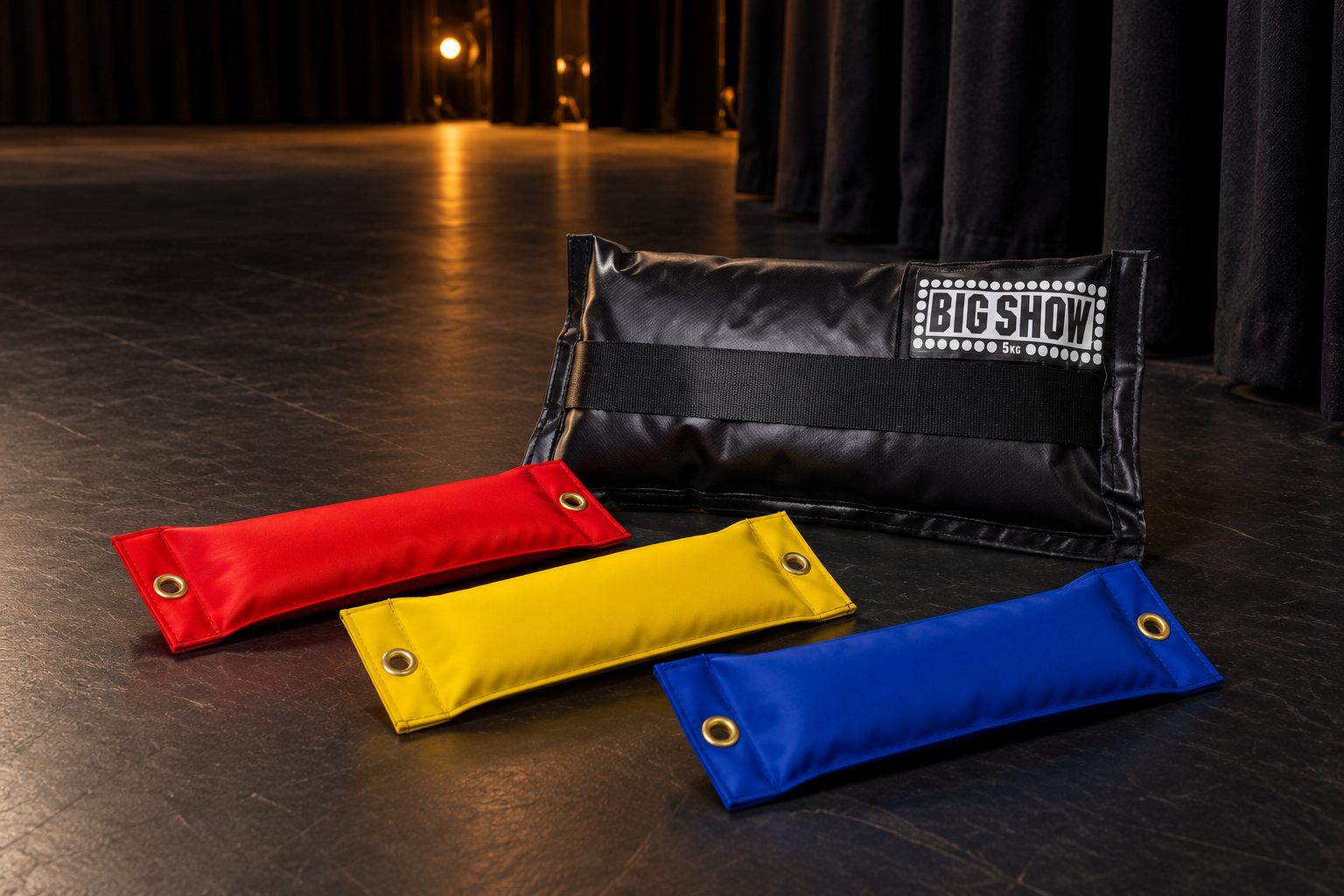
STM Studio Supplies offers Big Show shot bags in 5 kg, 10 kg and 15 kg sizes, along with 2.5 kg colored stage marker bags. Shot bag hire is also available for productions that need additional weights for a season or particular event.
Choosing the bag for the job
| Theatre task | Product to consider | What to establish |
| Ballasting suitable ground-supported scenery or equipment | Big Show shot bags | The required mass, location and method of keeping the ballast in place. |
| Setting provisional positions in rehearsal | 2.5 kg marker bags | The reference point, colour key and clearance from performers. |
| Recording a final position on an approved floor | Suitable tested spike tape | Floor compatibility, visibility and removal requirements. |
Big Show shot bags have a flexible PVC outer, metal fill and a webbing handle. Marker bags are slimmer and have eyelets at their ends. STM’s listed marker colours are red, black, blue, white and yellow; confirm the colours required when ordering. The supplier’s Big Show product range includes several shapes, so specify the product as well as the weight.
Using shot bags with scenery and stage equipment
A scenic element may look settled when it is first positioned, then be affected by a door opening, a performer making contact or movement during a scene change. The designer or responsible technician should consider how the element will actually be used before specifying its support and ballast.
For suitable ground-supported scenery, shot bags can form part of the planned weighting arrangement. Establish where they sit, what retains them and whether they must be removed before the scenery moves. Keep them within the intended footprint and away from cast routes, stage entrances and emergency access.
The bag weight alone cannot tell you whether a flat or scenic unit is adequately supported. Height, base dimensions, load position and the forces acting on the unit all matter. The supplier’s weight-selection guidance also identifies ground conditions and wind exposure as factors in stability.
Follow the specified arrangement for compatible portable lighting or sound stands. Additional weight does not increase a stand’s structural load rating. For wider theatres risk planning, refer to Live Performance Australia’s safety resources.
Moving scenery needs its own plan
Ballast changes the mass that crew must start, stop and control. For a scenic truck or other moving unit, the design needs to address load retention, wheel capacity, braking and movement through the full route. Placing loose bags on a wheeled unit is not a complete solution.
Record the approved arrangement with the scenic information and rehearse the change. If the ballast has to be removed, give that task a clear place in the change sequence and specify who reinstates and checks it.
Fly systems and suspended loads
General-purpose shot bags should not be substituted into a theatres fly system. Counterweight systems and other suspended applications require the components and procedures specified for that system. A 10 kg product label states the bag’s mass; it is not a working load limit for its handle, eyelets or seams.
Marker bags in the rehearsal room
During early blocking, positions often change faster than the rehearsal plan can be marked permanently. Marker bags let the stage management team move a reference for a chair, table or scenic edge without repeatedly applying and removing tape.
Use a clear convention. The end of the bag might identify one corner of a table, for example, with the orientation recorded on the rehearsal plan. Agree the convention before using the marks, and update it when the blocking changes.
Colors can distinguish scenes or departments, but document the meaning and add written labels or a numbered plan where needed. Do not rely on color alone. Check the markers under the actual rehearsal or stage lighting, because visibility and color recognition can change.
A marker bag is a raised, weighted object. Keep it beside the intended action position with a recorded offset where appropriate, rather than placing it where someone will land, turn or step. This is particularly important for dance, fast movement and rehearsals involving children.
From rehearsal references to performance marks
Once a position is agreed, decide how it should be represented for the performance. A marker bag can remain useful in a clear, supervised preset area, while a tested low-profile mark may be more suitable within an action area. Review every raised marker before the performance floor is released to cast.
For scene changes, use a plan that identifies the scenic item, its final orientation, the reference used and the crew member responsible for the reset. Check the arrangement during technical rehearsal at the actual working light level.
STM’s tapes and adhesives range includes floor-marking options. Check compatibility with the actual surface before choosing tape. Obtain venue approval where required and follow the coating or flooring supplier’s advice.
Protecting painted stages and dance vinyl
Use a clean bag on a clean surface. Grit trapped under a weight can abrade a painted finish, while a damaged eyelet or seam can create a local point of contact. Inspect the underside before placing bags and lift them when repositioning.
A soft outer does not establish that a bag is non-marking on every finish. Check the proposed contact with the floor supplier, particularly on recently coated stages or dance vinyl. If a protective interface is required, it must be compatible with the floor and must not allow the support or weight to slide.
Our painted-floor care guide explains the importance of managing dirt and avoiding damaging equipment contact. Keep cleaning, inspection and the removal of temporary items in the pre-show floor check.
Touring and school production planning
Keep a weight schedule with the production inventory so the receiving venue knows what is arriving and what must be sourced locally. Include the filled weight and quantity, not simply “shot bags”. Record marker colours separately from the ballast allocation.
Account for the combined transport load. Eight 15 kg bags weigh 120 kg before their container. Check loading access and handling equipment before bump-in, and allocate handling tasks to suitable crew. SafeWork NSW’s manual-task guidance covers the effects of repeated handling, force and awkward postures.
Before each use, check seams, handles and eyelets. Isolate damaged or leaking bags, clear any spilled fill and record missing items at bump-out so the next venue receives an accurate inventory.
Buy or hire shot bags through STM
A resident theatres, school or rehearsal venue may benefit from owning the weights it uses regularly. Hire can suit a short season, touring stop or temporary increase in requirements. Compare the hire period and transport costs with purchase and ongoing storage.
STM Studio Supplies is based in Chatswood, Sydney. Send us the required weights and quantities, marker colours, venue location and production dates. For hire, include bump-in and bump-out dates and the collection or delivery requirements. For purchases requiring freight, include the delivery postcode and access details.
Browse our shot bag and marker bag range, enquire about shot bag hire, or call 02 9417 3000.
Common theatres questions
What is the difference between a shot bag and a marker bag
The Big Show shot bags listed by STM are 5 kg, 10 kg and 15 kg ballast options. The colored stage marker bags are 2.5 kg and provide movable position references. Select by the task and the specified equipment requirements.
Can marker bags replace all stage tape
No. They suit movable references where a raised object can be kept clear of movement. Final marks in performance areas may need an approved low-profile option, selected and tested for the floor.
Can these bags be used to soundproof a stage
Do not specify them for acoustic treatment. The product information reviewed does not establish tested sound absorption or sound-insulation performance for these bags.
Does STM offer shot bag hire
Yes. Contact STM with the production dates, required weights and quantities. Availability, hire terms and transport arrangements are confirmed when quoting.


Shot Bags

Shot Bags


Shot Bags


